
Irish Endurance rider Amy McAuley takes 8th place in 120km at 2* Al Whatba in Abu Dhabi riding Rafik De Kerpont for MRM Stables
Because they're worth it
Irish Endurance rider Amy McAuley takes 8th place in 120km at 2* Al Whatba in Abu Dhabi riding Rafik De Kerpont for MRM Stables

TRM® Nutrition | Equine Health
·
𝐀𝐫𝐞 𝐲𝐨𝐮 𝐚𝐰𝐚𝐫𝐞 𝐨𝐟 𝐭𝐡𝐞 𝐬𝐢𝐠𝐧𝐬 𝐨𝐟 𝐚𝐧 𝐞𝐥𝐞𝐜𝐭𝐫𝐨𝐥𝐲𝐭𝐞 𝐢𝐦𝐛𝐚𝐥𝐚𝐧𝐜𝐞 𝐢𝐧 𝐲𝐨𝐮𝐫 𝐡𝐨𝐫𝐬𝐞? Read our advice bl
·
They ensure smooth working of enzymatic pathways, nervous, cardiac, musculo-skeletal and even digestive system, apart from also helping maintain osmotic pressure and fluid balance. As a result, a balanced homeostasis (body’s ability to maintain a stable internal environment) is achieved.
The 5 major ions required by a growing and an adult horse include sodium (Na+), potassium (K+), chloride (Cl–), calcium (Ca2+) and magnesium (Mg2+).

7 h ·
“Don’t forget all the answered prayers that you are walking in.”
Photo by: @maaikephoto | Featuring: @hdorn @cristina_no_h @stetsonusa @clover_b_jewlery
#iamcowgirl#cowgirl#cowgirlmagazine#western#westernlifestyle#westernfashion#horse#horses#ranchlifestyle#rodeo#ranch#ranchlife

For as long as I have been practicing medicine, my boots have been my go-to shoes. They are the most comfortable and stable shoes I’ve ever owned.
I stand in the OR with them, round on patients, rush to traumas….all in these boots. I wear them so much that the nursing staff and employees nicknamed me “boots”. I have had this particular pair of Ariat boots for 14 years. I contemplated not weari… See more


TRM® Nutrition | Equine Health
·
𝐀𝐫𝐞 𝐲𝐨𝐮 𝐚𝐰𝐚𝐫𝐞 𝐨𝐟 𝐭𝐡𝐞 𝐬𝐢𝐠𝐧𝐬 𝐨𝐟 𝐚𝐧 𝐞𝐥𝐞𝐜𝐭𝐫𝐨𝐥𝐲𝐭𝐞 𝐢𝐦𝐛𝐚𝐥𝐚𝐧𝐜𝐞 𝐢𝐧 𝐲𝐨𝐮𝐫 𝐡𝐨𝐫𝐬𝐞? Read our advice bl
·
They ensure smooth working of enzymatic pathways, nervous, cardiac, musculo-skeletal and even digestive system, apart from also helping maintain osmotic pressure and fluid balance. As a result, a balanced homeostasis (body’s ability to maintain a stable internal environment) is achieved.
The 5 major ions required by a growing and an adult horse include sodium (Na+), potassium (K+), chloride (Cl–), calcium (Ca2+) and magnesium (Mg2+).
TRM® Nutrition | Equine Health
·
𝐀𝐫𝐞 𝐲𝐨𝐮 𝐚𝐰𝐚𝐫𝐞 𝐨𝐟 𝐭𝐡𝐞 𝐬𝐢𝐠𝐧𝐬 𝐨𝐟 𝐚𝐧 𝐞𝐥𝐞𝐜𝐭𝐫𝐨𝐥𝐲𝐭𝐞 𝐢𝐦𝐛𝐚𝐥𝐚𝐧𝐜𝐞 𝐢𝐧 𝐲𝐨𝐮𝐫 𝐡𝐨𝐫𝐬𝐞? Read our advice bl
·
They ensure smooth working of enzymatic pathways, nervous, cardiac, musculo-skeletal and even digestive system, apart from also helping maintain osmotic pressure and fluid balance. As a result, a balanced homeostasis (body’s ability to maintain a stable internal environment) is achieved.
The 5 major ions required by a growing and an adult horse include sodium (Na+), potassium (K+), chloride (Cl–), calcium (Ca2+) and magnesium (Mg2+).
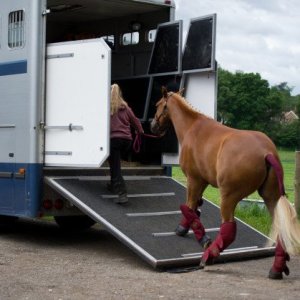
9 tips for travelling in the heat with your horse
World Horse Welfare campaigns officer for research and education, Hannah Westen, gives her top tips for keeping horses hydrated when travelling by road.
If at all possible try to plan your travel around the weather conditions and avoid travelling during high temperatures and high humidity. If it is unavoidable pick the times of day when it’s likely to be coolest – setting off a bit earlier or later will make the experience much more pleasant for both you and your horse.
Before setting off, it’s important to ensure horses are fully hydrated by providing them with unrestricted access to forage and water for at least six hours with plenty of space to rest and relax.
Whilst it sounds pessimistic, when travelling by road you just never know when or for how long you might get held up, so make sure you have plenty of forage and water on board to keep your horses happy and healthy.
Access to quality forage will not only maintain a healthy digestive system and provide an ongoing source of energy but also creates a small reservoir of fluid in the horse’s gut to help keep them hydrated.
Horses should be offered water at least every four and a half hours whilst travelling, or more frequently in hot weather conditions.
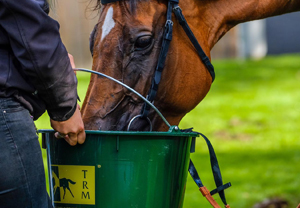
Anyone who has offered their horse a drink in an unfamiliar place will know that horses can be choosy about the type of container they will drink from and the taste of the water, but it’s important to stress that this doesn’t mean they’re not thirsty. If possible, try and take water from home and provide it in a bucket they are used to drinking from. In addition it’s always beneficial to familiarise them to different containers in case you can’t take your own. You can also try flavouring the water with apple juice.
Horses can become dehydrated more quickly when they are stressed or unsettled so try to minimise this wherever possible. Loading and unloading are two of the main stressors for horses when travelling so make sure you do as much as you can to keep the process calm and relaxed. Practicing often without the pressure of heading to a show or event will help it become second nature and when you are on a schedule leave plenty of time to load. Ensure the vehicle is well ventilated and drive carefully to make the journey as comfortable as possible.
As with pre-planning before a journey, it’s just as important to give plentiful forage and water upon arrival at your destination. If you’re travelling to a show or event then make sure your horse has time to relax, eat and drink before competing or beginning exercise.
Like this? You might also enjoy reading these:
Whilst a dehydrated horse can deteriorate quickly, dehydration can be very hard to spot so make sure you know what signs to look out for and can act fast if required. Indicators include depression, lethargy, dullness in eyes, decreased appetite, lack of or infrequent urination or defecation, licking surfaces, abnormal drinking behaviour such as drinking for extended periods of time, taking long draughts or gulping water.
Find out more at www.worldhorsewelfare.org


The modern vibe of moto jackets and the timeless designs of the Chimayo weaving tradition: Embroidered Chimayo Jacket. #Ariat
 Horseaware